We work hard to make more money, build a better life, and give ourselves more freedom. But how often do we actually stop to enjoy any of it?
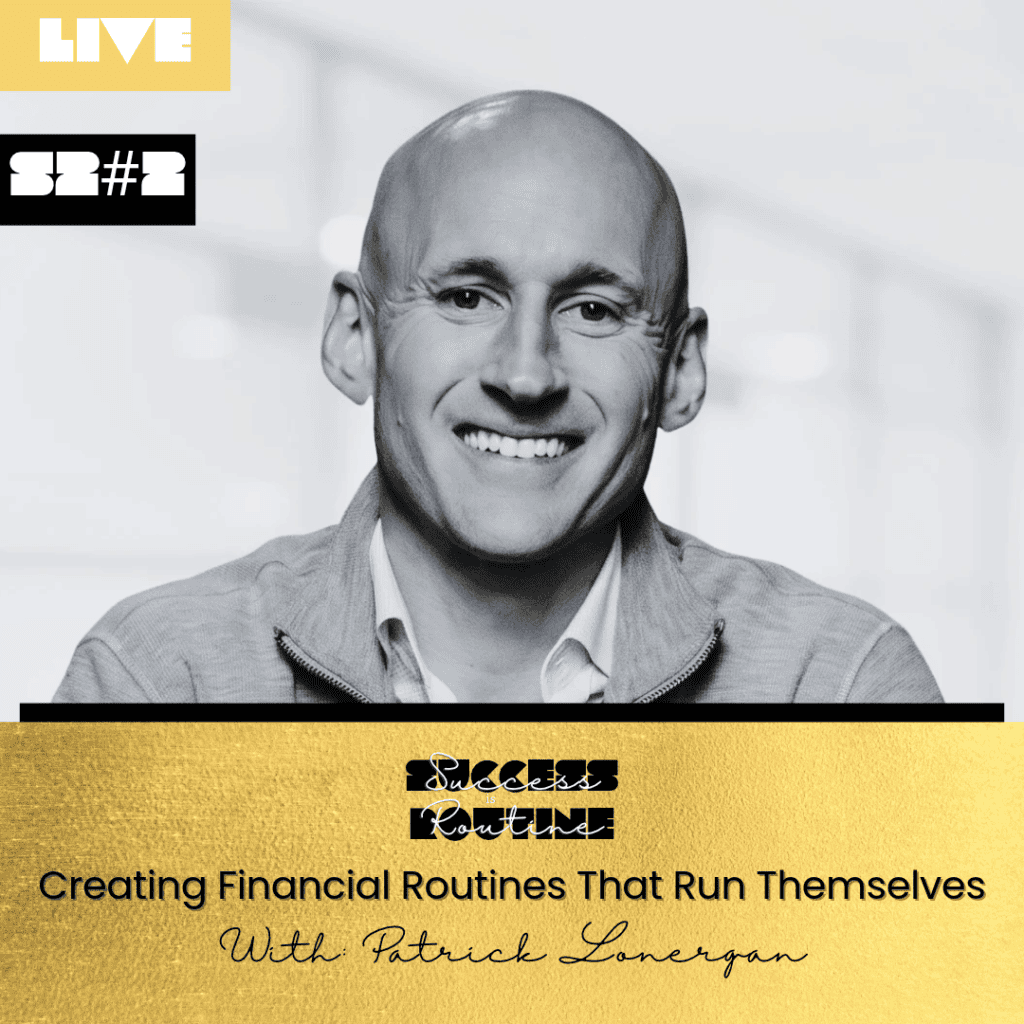
On Success is Routine, Hannah Mitrea sits down with Patrick Lonergan, founder and CEO of Vital Wealth, to talk about something we can all relate to: wanting to do well in life without missing out on actually living it.
Patrick has spent years helping entrepreneurs build wealth, and his own career hasn’t exactly been a straight road. From surviving a real estate downturn to building a business around his strengths, he’s learned that having more money doesn’t always mean having a better life.
“Another zero in my bank account does not do me any good for living a great life.” Patrick shares his REACH framework, the morning routines that keep him grounded, and why the people we spend time with, our health, and the experiences we create matter just as much as what’s in our bank accounts.
Because at the end of the day, what’s the point of working so hard for a life you never get to enjoy?
(4:55) The law school decision that led to real estate
(6:56) Two different career paths after the downturn
(7:50) Finding new opportunities when the market changes
(9:27) Why successful teams need different working styles
(10:34) Managing endless business ideas through focus and accountability
(12:09) Building an organization instead of doing everything yourself
(14:28) Starting the day with exercise, sunlight, and prayer
(17:43) Making morning routines about family connections too
(20:47) Why entrepreneurs need bookkeeping, automation, and cash flow clarity
(23:52) Breaking the cycle of failed habits through accountability
(26:46) The REACH framework for defining a successful life
(31:06) Two books that challenge how we think about money
Tune in to Success is Routine for a fresh perspective on money, meaningful routines, and making sure you’re actually enjoying the life you’re working so hard to build!
About Patrick Lonergan
Patrick Lonergan is the founder and CEO of Vital Wealth and host of the Vital Wealth Strategies podcast. After building a real estate portfolio of approximately 1,500 apartment units with his wife, he transitioned into wealth management following the 2008 financial crisis. For nearly 15 years, Patrick has helped entrepreneurs with tax strategies, cash flow, and wealth building. His approach goes beyond finances, emphasizing meaningful relationships, personal well-being, intentional routines, and building a life worth enjoying.
Contact Patrick Today!
Be Our Next Guest!
Your success story might be the spark someone else needs.
Behind every breakthrough are decisions, setbacks, and routines worth talking about. We want to hear yours.
Have a story worth sharing? Join Hannah Mitrea on Success is Routine. Let’s get you behind the mic!
Disclaimer:
The content of Success is Routine is provided for informational and educational purposes only. The views, experiences, and strategies shared by guests are personal to them and should not be considered professional, financial, legal, medical, tax, or business advice. Always consult an appropriate qualified professional before making decisions related to your personal, professional, financial, or business circumstances.
Transcript
Hannah Mitrea 0:04
Hello, everyone. This is Hannah, your host, and you are listening to the Success Is Routine podcast. Our show is on a mission to talk to leaders in life and business that have achieved success, and to learn what their routine is. If you are ready to create your routine to success, you’re in the right place. Now let’s get started. Welcome back, everybody, to Success Is Routine. I’m so excited to have here with us today Patrick Lonergan. Patrick is the founder and CEO of Vital Wealth and the host of Vital Wealth Strategies podcast. So welcome, Patrick, to the show.
Patrick Lonergan 0:37
Yeah, Hannah, thank you so much for having me. I’m excited about this conversation.
Hannah Mitrea 0:42
Yeah, I’m really excited too because you talked a little bit about how you know you were in real estate when we discussed earlier back in 2000. Everything kind of turned down there, and kind of had to regroup, and it definitely connected to me. I was in real estate at one point as well, and so I feel like that’s a path many people see they want to take, but it doesn’t always work the way they want it. So share with us a little bit more of your story, Patrick, on you know how you got from real estate into wealth management, and now you have your own podcast.
Patrick Lonergan 1:14
Sure, yeah. So I started off. My plan was always to be a lawyer. I was going to be an attorney, and I figured out pretty quickly there wasn’t a lot of attorneys that enjoyed being attorneys, and I was late for my first class. I had a full ride to law school. I was late for my first class on the first day buying a piece of real estate, and quickly realized that was where my time and intention was going to go. And I could always go back to law school later if I needed to. And the good news is it worked. It was early 2000s until it didn’t. It was my job. I recruited my wife into the business. Eventually, we had about 1,500 apartment units, and it was my job to go find the deal, raise the money, and then my wife’s got the operational expertise to make all those things go. And the real estate market melted down. You know, 2008, ’09, ’10, and there wasn’t a lot of opportunity to go find deals or raise a lot of money for real estate. So I was in this spot where I’m like, okay, what am I going to do next? Where am I going to go? And I had some friends in I’ll call it the financial advisory space, and I always felt frustrated as a business owner, when financial advisors would come talk to me, they’d try to show me some other cool investment. I’m like, that’s not exactly what I need. I need something different. And so, we decided to get into the. We saw a business opportunity as a financial advisor. I could create recurring cash flow without having to go take on tens or hundreds of millions of dollars of debt to to make all that work, and we just started serving the entrepreneur. And there’s things that entrepreneurs need. They need tax strategy. CPAs are great, but they’re not tax strategists. They’re not driving the tax bill down. And they need help managing. I’ll call it liquidity. You know, they’ve got more ideas than they have time and money to execute on, and so they’re often running themselves out of cash. And so it’s like, all right, let’s build some infrastructure around all of that and bring value to the marketplace. And so, that’s what we’ve been doing for the last 15 years.
Hannah Mitrea 3:08
Yeah, incredible. Is your wife still in real estate, or she made this the switch with you? She is.
Patrick Lonergan 3:12
No, she still owns and operates senior housing property. That’s the direction that the portfolio is managed or is has migrated to. And I think we’re involved in about $200 million worth of assets, so it’s not a small operation. I think she has 700 employees, so again, I’m happy with my small team. I wouldn’t want anything to do with that. So
Hannah Mitrea 3:36
Yeah, no, that’s incredible. It’s like taking the real estate. You kind of stepped away, and I feel like that was a part of it. And you kind of mentioned there too, kind of seeing that cash flow and how it wasn’t there. And so, what was that the trigger for you that made you kind of essentially wake up to see? Okay, this is a problem that we are actively having as an entrepreneur, and many entrepreneurs have to help essentially reposition your trajectory of career.
Patrick Lonergan 4:04
Yeah, you know, I think it was, you know, in that real estate meltdown, we had it was there was lots of turmoil in our, I’ll say, our portfolio, and I needed to go, you know, just look for new opportunities to generate revenue because I wasn’t very valuable to the business doing the things I had been doing. And so I think that’s something too is like, you know entrepreneurs are always looking for new opportunities. And so I think that’s something that I’ve taken an assessment called the Kolbe and I am a. I’ve taken it a few times, and I’ve been a nine and a 10 on Quick Start. So it’s like if you need some ideas about something, like I’m, I’ve got them for you, you know. And scale goes up to 10. So I’ve always been like looking for. I always see new opportunities, and so I think that was where we started to migrate and go, okay, hey, I think there’s a way to, you know, shift in this direction, and I like finance, I like numbers, I like, you know, analyzing all of those opportunities, and so it was like, all right, I think this fits nicely with what we’re trying to accomplish.
Hannah Mitrea 5:19
Awesome, I’ve never heard of the Kolbe, so I have to look at that. And so I’m guessing like the higher up you are, probably more like ideation and like ideas of what you want to do or creation of things. And then the lower is just more of like more comfortable with the mundane.
Patrick Lonergan 5:36
The yeah
Hannah Mitrea 5:36
The that’s what I’m kind of guessing.
Patrick Lonergan 5:40
Yeah, and you don’t like a lot of change in your life, you know. Like if you’re very low on the quick start, you know you you’re going to be doing the same things day in and day out, and that’s okay. Like I think that’s great. You know, we and we’ve had people in our organization that are really low on quick start. It’s actually a really good thing. Like those people like you know they like processes and systems and executing time and time again, and they’re not trying to improve, you know, the thing. They’re just wanting to run on that track, and it’s like brilliant. We need those people in our organization. So,
Hannah Mitrea 6:11
1,000%. As a business owner, I agree completely. You need somebody on that’s probably every number at some point on this scale. But kind of like I know we didn’t even talk about this, but it’s kind of interesting. So how do you keep since you’re so high on this scale? So there’s probably like business ideas constantly coming. Like I know at one point we owned probably 100 like GoDaddy domains on business ideas and things we want to create. So how do you keep them from becoming everything in your life, essentially. How do you make sure that you keep that focus?
Patrick Lonergan 6:46
Yeah, that’s really a great question. So we run our business on this framework called Traction. The book is called Traction, but in there it outlines the Entrepreneur Operating System. And when you look at the Entrepreneur Operating System, there’s a what’s called an Accountability Chart, or it’s an organizational chart. And the Visionary’s at the top, and that’s me with all the ideas. Then the Integrator is next, and then you’ve got sort of the three main functions of the business. You’ve got HR and finance, operations and sales and marketing, and so that Integrator is a key person. They’re like, okay, fantastic. I’m glad you have 12 ideas. Which one are we going to execute on to move forward? And it really EOS gives you a framework to for me to like put all those ideas out there, and then organizationally we can decide whichones, if any of those, we’re going to move along with, because one thing that I found that is a there’s a lot of really good things that come with the being a high Quick Start with lots of ideas, but the most successful businesses we see are excellent at focus. Like they get laser-focused on the right opportunity and just are all in on those things instead of having, you know, 12 different initiatives going. They pursue one really well.
Hannah Mitrea 8:08
All right. So I really like that you have like that system built out for it. So what kind of, like how did you implement this traction into your team? How did it become an idea for you?
Patrick Lonergan 8:19
Yeah, from the get go, interested in investing in the team to grow farther, faster. I would rather have, you know. I feel like there’s a few different things you can optimize for. I can optimize for income, like take-home income, or you can optimize for long-term enterprise value. And I was never really interested in creating a what we’ll call a lifestyle business that you know I create lots of income and don’t have to work too much. Now I’m not saying everybody should like work 90 hours a week. That’s not what I’m trying to say. But I’ve been very interested because I actually think you can work a lot less if you build an organization that has like great people around you. So in the that process, I’m I love I I say reading books, but I listen to a lot of books. I’ve been an audio book nerd since like I remember buying a tape set back in you know 25 years ago and listening to a cassette tape set. It was Napoleon or not Napoleon Hill, Earl Nightingale, Acres of Diamonds. I think it was called, and it was great. So I listened to tons of books, and I think I somebody recommended Traction, and I listened to it, and then I bought it because I had to study it and really start to understand these concepts and principles. I bought the hardcover or the physical book that I could like go through and make notes, and so yeah, that’s where that came from. And it’s just been really good to help us have a framework to take and grow the business. I don’t really care. There’s lots of different frameworks out there, but that’s one that has just worked for us and a lot of our clients.
Hannah Mitrea 10:00
I know I love that. I’m big audio book too, but I love getting the physical book and like having it like so. It’s like they call it immersive reading, where you’re reading the book as you’re reading the book and listening to it. So awesome! I love that you were able to find that book and come there. And so I want to move over to some of the routines we kind of talked about and one that you shared specifically your morning routine, and so how does that morning routine kind of impact your day, and you know what specific aspects of your life is it kind of empowering or you know leading you to success with?
Patrick Lonergan 10:34
Yeah, I’m a nerd on data, and so I look at my morning routine, and I’ll kind of outline it. I’m an early riser and not quite as early as I get up a little earlier than I would like to because one of my friends that I work out with is owns a coffee shop, and he’s got to be there really early, so he shows up at my house at 4:30 a.m. I’ve got a gym at my house. I joke, I don’t know if my garage has a gym in it, or my I park my cars in my gym. I think I park my cars in my gym, but okay. So we’ve got a nice gym. Yeah, they do. They fit nicely, and I got plenty of room to work out. So I start the morning. I work out, and not just the physical benefits of working out, but also the like the mental health benefits of working out. There’s a really good book called Burnout, and I think it’s actually written for women. I read it, got it for my wife. I think might have been a friend of ours recommended it to both of us. But I was like, this is so good. But it talks a lot about like how we have to move our bodies to make sure that we’re also mentally healthy. So I like to start there. I feel like I have a lot of energy to start the day, and then I move to I do some Bible study every morning. I roll through some of the prayers, and then like Andrew Huberman talks about, you know, the benefit of like 10 minutes of morning sunlight. And so this time of year, when you start working out at 4:30 a.m., you’re done with your workout before the sun comes up. And so I’m sitting outside; it’s still nice out, and I live here in the Midwest, and so I get to just soak up some of that nice sun while I’m doing some Bible study, and we’ll call it prayer time. So I’m checking a lot of boxes there, and it just sets my day the right tone for the day. I find when I skip those things, I somehow, you know, I might sleep longer, but I feel worse. I feel a little groggy. Also, just nerding out a little bit on some of the spiritual things. If like, okay, if we just assume that I’m connecting with the Creator of the universe and asking for some help in my day, like I’m okay with some divine, you know, guidance and inspiration in my day to day activities. So yeah, I think that’s just a great way to set the day.
Hannah Mitrea 12:55
No, I think that’s great, and you know, whatever religion our listeners fall into, you know, if it’s Christianity and you’re talking to God and it’s prayer. At the same time, prayer is very similar to meditation, and so if you don’t fall into that religion, like there’s still that meditation to be with yourself and to, you know, be calling those things to you. And I think, you know, in the religious side of it, having that prayer is going to help center you for sure in what you’re doing. So you say you start at 4:30. So it’s like unwillingly a little bit because you’re friends. But how long does this kind of take you? Because you know if you’re still before the sun comes up and things like that.
Patrick Lonergan 13:36
Yeah. So, like this morning we were done by 5:45. So then I was, oftentimes he’s got to get out of there pretty quick because he’s opening up coffee shop. So I’m kind of cleaning up the gym, and then I I usually we have the garage doors open. I’ve got doors in both the front and the back, and I’ll just wander out to the backyard, and we’ve got different spots I can sit down. And so then I’m I usually wrap that up around 6:30. So I might clean up the gym 15 minutes. Might be a half hour just hanging out, soaking up some early morning sunshine, and spending some time with Lord. And then I go in, take shower, get ready to go. And then my daughter, I take her to school. I’m usually ready about seven. I’m waiting for her till about 7:20, and then we’re out the door getting the day started. So, yeah, that’s. But I do love that time with my 13-year-old daughter. I’ve got three daughters: 18, 16, 13. The older two, one’s off at college, one drives herself, and so I still get that time with her. And it’s just great time. It’s good to just be able to connect and figure out what’s going on in their lives, and you know those tiny little investments are they pay off. They’re good.
Hannah Mitrea 14:46
Yeah, one thing I’m hearing a lot of is the connections too. Like having your friend come over, that’s a big thing to you know get to spend that time with somebody you care deeply for, even like friendship wise, and then with your daughter. So I’m seeing a lot of that in your routine, kind of be a big part of it.
Patrick Lonergan 15:04
Yeah, absolutely. And there’s some really interesting data out there. Again, I’m kind of a data nerd, but you start looking at people that have that lack interpersonal relationships, and that’s more and more common anymore. You know, our phones are disconnecting us more than connecting us, and it’s worse than smoking, right? Like if you don’t have good, healthy interpersonal relationships, it’s worse for your health than smoking. And they’ve done some long-term studies on these things, and it’s really powerful. So it’s like just sort of setting your phone down and going finding a human being and being able to connect on a regular basis is a wonderful thing.
Hannah Mitrea 15:42
Yeah, no, I love that, and it goes right into, like the traction that you’re doing at work and having this small team where it is a more intimate, and so you get to know each other to really build what you’re doing. And I love hearing about that because our team here is we always say it’s culture and quality; those are values and cultures first. Because if they don’t want to show up, nothing good is going to happen. Essentially, yeah. So, but to kind of pivot off the data side of it, and so you know, I love that that’s your personal morning routine. But you know, you do wealth management for many entrepreneurs and clients, and when we talked, a big thing was, you know, the cash flow and the bookkeeping. So going from data in the world into data into your personal. What are some of those routines that you implement with your clients? Because you know as an entrepreneur, I know bookkeeping is not fun. So what are you doing to help your clients create those routines?
Patrick Lonergan 16:38
Yeah, for sure. I, you know, bookkeeping is a decent skill to have, but I think if I were making a very first hire, it’s an outsourced bookkeeper to make sure. You know, I can do lots of things. I can go generate revenue. I can create an amazing product. But as soon as it comes to the books, I want somebody else handling that because there’s probably a better use of my time. So I think the first thing is outsource to a capable, competent bookkeeper, and they’re not necessarily writing the checks for you. They’re just making sure that everything’s categorized, and you can run a report and go, “Okay, cool. I’m making money, or I’m not,” because so many business owners are running their business, especially when they start looking at the bank account, going, “Do I have money or not? You know, is there money in there or is there not money in there?” And that can be a deceptive way of managing the business. So, but once you have the bookkeeping dialed in, there’s just a few steps that we really like. First, it’s understand your free cash flow. Like, because I got my business income, then I got my personal lifestyle expenses, and then I got some free cash flow. And it’s like, okay, once I figure out that free cash flow number, then we think automation is just critical. Like, let’s start getting those dollars automated to certain places. Because I promise, if they live in your bank account, one of the reasons that the 401k for the average employee is so successful is because it’s automated. It doesn’t get to live in their bank account. Most people can’t save any money, but they’ll retire with a million dollars plus in their 401k because it just happened every single pay period. And so we think that’s a critical piece of just making sure that the entrepreneur’s goals, whether it’s like I need some liquidity, access to capital, or I need to invest some dollars and get them out of the business. We just try to automate as much of that as possible. And then the final step is let’s optimize our debt. You know, debt really does erode wealth, and so let’s make sure that we’re systematically getting rid of some of that debt. Or if we need to have debt, let’s find the most efficient way to borrow that money.
Hannah Mitrea 18:40
No, I like that. That the whole idea of automating it essentially is a routine for success when your money is automatically so it’s routinely leaving and going where it needs to go properly. Because it’s so true. A 401k is such, you know, as an employee, it becomes such an easy like default setting, but as a business owner, we don’t have that 401k default if we’re not, you know, manually figuring that out. And so it’s really a good strategy there for entrepreneurs to understand: Hey, how do we make sure that we’re not just living month to month on our cash flows?
Patrick Lonergan 19:17
Yeah.
Hannah Mitrea 19:18
All right. So I wanted to ask also. So leading kind of to both of these, kind of you know, with your morning routine, with setting up these cash flows properly, you know, how hard is it to stick to them, and how long did it take before you were able to truly stick to them?
Patrick Lonergan 19:37
Yeah, that’s a great question. I think they can be challenging to stick with. I think the like my morning workout routine. I used to try to work out at my house. This was before I had kids, but they were little, and I like I had some weights in my basement, and I’d go down there and try to do some workout, but. What happened to me was I would be like, you know what I’m going to do? I’m going to wake up in the morning and I’m going to work out. But I didn’t have any accountability. I was going to go do it by myself. And I’d look at that clock and I’m like, now I’m going to stay in bed. And then I’d be like, but what I will do is I’ll work out this evening. Then I’d get home and life would happen and we’d be busy like getting the kids for ready for bed, and guess what? I wouldn’t work out again. And I’d be like, you know what? I’m going to do in the morning. I’m going to work out. And that cycle just continued on itself. And so it was like, forget it. I’m going to join a gym. You know, I’m going to find a friend that is going to come to the gym with me. And then I started building that routine. And then it became just something that I did regularly after doing that for a number of years. Then, after COVID, I built out my own space, and I didn’t need somebody. I could go work out by myself, and it worked out okay. So I think a key piece of that routine was having some accountability and doing it with somebody. You know that was a kind of a critical piece. There’s again a data point that says if you go work out by yourself, you start on your own, you got a 20% chance of being successful. If you bring a friend, 80% chance. So it’s like okay, cool. Like, just keep those things in mind with your routines you’re building. It’s like how can I do this along with somebody? If we both think this is healthy, like let’s get it started. And this could be in your bookkeeping in your business, your workout routine, your marketing strategy, whatever you, you know, if you recruit some help and some accountability, it can take you a long way.
Hannah Mitrea 21:28
Yeah, and it’s crazy. I know we didn’t get on this call thinking like connection with what we’re going to talk about and that routine of it in a way, but I’m hearing it throughout everything from the bookkeeping, find somebody. It’s that accountability that’s really making that routine stick. So less of and like just overall, it’s a lot less of hey, you have to do everything by yourself to get it done. But it is finding that community, finding those people they can count on. You know, even if we start at the very beginning, you and your wife got into real estate together, so it was a joint community right there. They did so,
Patrick Lonergan 22:07
Yeah, for sure.
Hannah Mitrea 22:08
I love seeing all that through and being able to hear that story. But I like to end with kind of success and how you define success. And I know, you know, when we talk, you said success is not about zeros and how many zeros you have in your bank account, essentially. So share with me more of what success is for you and how you measure that.
Patrick Lonergan 22:27
yeah. So we talk a lot about wealth with people, but at the end of the day, that’s not what any of us is trying to get wealth for, right? Like another zero in my bank account does not do me any good for like living a great life. And so, when we think about a great life, it’s this acronym called REACH. So the R’s for relationships, E’s for experiences, A’s for advancement and growth, C is for contribution. It’s better to give than receive. And then H is our health. And there’s three components to our health, right? So there’s my physical health. Can’t give me cancer for any amount of money. There’s my emotional health. If I’m depressed and can’t get out of bed, you know, again, doesn’t matter how much money I have. And then there’s a spiritual health component. If I’m morally bankrupt, you know, that’s no good either. So, I like to look at how my money and our clients’ money can support those that acronym. And I think about things like if you’re buying a because the world will tell you to go do things outside of your REACH. Go buy a bigger, faster, shinier fill in the blank, right? That has nothing to do with that acronym that we just talked about. Like it’s just stuff for stuff’s sake, because you know the world tells me that’s cool. But I am okay. Like, yeah, I’m going to go buy the lake house because you know, I can go spend time with my family. We can create amazing experiences. We can get away and do some unplugged thinking if we want to need to, and which is good for our health. And you know, heck, I could even let somebody come stay there for free and you know, have some of that contribution fit into the mix. So it’s like it can check all of those boxes. That’s great. But if you’re doing it to impress your friends, and you’re never going to go there, like don’t do that. So we think that’s really where success lies is just leaning into those things that are most important, most valuable to us. And again, zeros are fine in the bank account. We our clients today I had two conversations. One’s exiting his business for $53,000,000. One’s got a take-home income of $10 million a year. It’s like, okay, these people are at the very top end of the wealth, you know, sphere. But they’re also looking at it, going, yeah, I understand. Like, I like playing the game. The game is really fun. I like building the business, but I’m not willing to do it at the cost of all these other things, which I really appreciate.
Hannah Mitrea 24:45
Yeah, no, and I think that’s a perfect way to look at it because now it’s, you know, when you want to make that purchase, like the lake house, you can look at it as it meeting the REACH that actually matters to me, and not just the vanity metric of chasing the Joneses, and you know, doing what society keeps making you think. Oh, you need this, you need that, and things like that. And so it brings it back to, you know, the relationship, the health, because
Patrick Lonergan 25:12
Hannah Mitrea 25:12
If those things aren’t there, you know, it makes it really hard to get much further. So, no, I I love that. I love hearing this story, so thank you for sharing those things. And then tell people how can they connect with you. So you know,
Patrick Lonergan 25:26
Yeah,
Hannah Mitrea 25:26
through your podcast, through your work.
Patrick Lonergan 25:30
Yeah, our podcast is a good way to get to know us, know how we think about things. So you can go to vitalwealth.com and check out. We’ve got a podcast link there, or if you just search Vital Wealth Strategies on any of the podcast platforms, we’re out there all over the place. Apple, Spotify. So yeah, YouTube, you can find it there too. And then if you’re really interested, you know, on average we save our clients over $300,000 a year in income tax. The entrepreneurs typically frustrated by that, and they have great team, great CPA. But you can check out our website and vitalwealth.com, and if you want to schedule some time to talk more, typically our clients have a take-home income of a million dollars and up. That’s when we can really start to move the needle. So that’s yeah, that’s how you can learn out, learn more about what we do, and even if you’re not quite there, the podcast is a great place to just learn these wealth-building strategies and how to think as an entrepreneur.
Hannah Mitrea 26:31
Awesome, and I know you mentioned a lot of great books, and so if you had to pick just one of them for listeners to read, what’s that one you’re leaving them with?
Patrick Lonergan 26:39
Yeah, you know, I think there’s one on the topic of money that I think is just great, and Morgan Housel might be my favorite author on money, and he’s got one called The Psychology of Money, and I think just the way he frames it is just brilliant, and so it’s such an easy read. He tells great stories, and his financial principles are just fantastic. So Morgan Housel, Psychology of Money, a great one. And if I had to put one in there that also aligns really closely, sorry, I’m going to give you two, Hannah. I’m sorry. Okay, you can edit it out if it’s no good. But there’s a book called Die With Zero that really talks about like, how to support, like go get relationship capital. Go do amazing experiences. Don’t just save it all and pass it on to your kids when they’re 70 years old. That’s not it.
Hannah Mitrea 27:30
I love that. Okay, I’m gonna look at those ones for sure. But thank you so much, Patrick, for sharing your routine from morning to your wealth management. I’ve loved having you on. And for all of our listeners, go check out Vital Wealth Strategies podcast and his website to learn more about Patrick. So thanks so much.
Patrick Lonergan 27:47
Thanks a lot, Hannah.